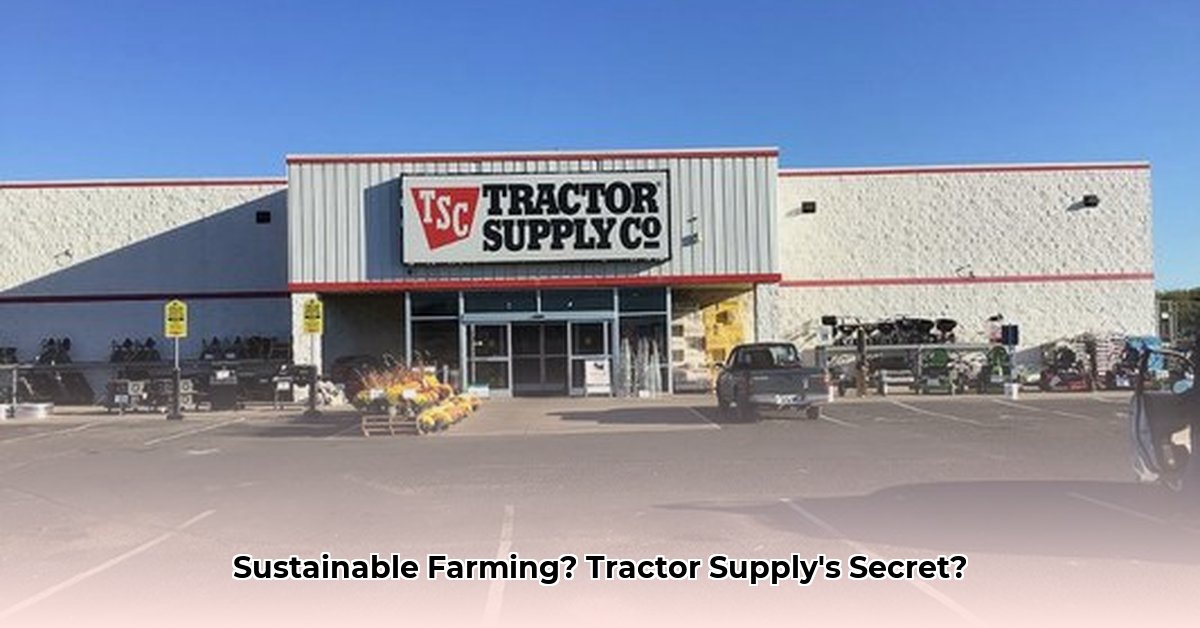
Tractor Supply Company (TSC) plays a significant role in Oklahoma's agricultural landscape, including its Broken Arrow location. This article examines TSC's contribution to sustainable farming practices within the state, focusing on product availability, network reach, and opportunities for improvement. We'll explore how readily accessible sustainable farming supplies are at TSC, analyze the company's impact on statewide sustainable agriculture, and propose actionable steps to enhance this impact. For more on older farming equipment, see this helpful resource: old tractor info.
TSC's Oklahoma Network: A Statewide Reach
Tractor Supply's extensive network of stores across Oklahoma provides vital access to agricultural supplies for farmers and ranchers in both rural and suburban areas. This widespread presence positions TSC uniquely to influence sustainable agriculture practices throughout the state. However, the extent of its current contribution remains unclear. A detailed analysis of TSC's product offerings, marketing strategies, and supply chain practices is needed for a comprehensive assessment. How effectively does this geographical reach translate into enhanced sustainable farming practices?
Sustainable Farming Products: Assessing Availability
Determining the precise range of sustainable farming products offered by TSC in Broken Arrow and across Oklahoma presents a challenge. While TSC likely stocks products relevant to sustainable agriculture, such as organic fertilizers and water-efficient irrigation components, concrete information about their availability and prominence is currently unavailable. This lack of readily accessible data hinders a complete evaluation of TSC's contribution to eco-friendly farming. A comprehensive inventory and transparent product labeling within TSC stores would greatly improve transparency for consumers. Does the current assortment adequately meet the growing demand for environmentally conscious farming solutions?
Opportunities and Challenges: Unlocking TSC's Potential
TSC's extensive reach presents a significant opportunity to promote sustainable agriculture in Oklahoma. Its convenient store locations offer farmers easy access to vital supplies. However, whether TSC is actively leveraging this advantage remains a key question. Are they proactively sourcing and promoting sustainable products? Are they actively partnering with organizations focused on sustainable agriculture, like Oklahoma State University Extension? The potential for positive environmental impact is substantial but hinges upon a concerted effort from multiple stakeholders. How effectively is TSC currently utilizing its extensive network to support sustainable agricultural practices?
Actionable Recommendations: A Collaborative Approach
To maximize TSC's contribution to sustainable agriculture in Oklahoma, a collaborative approach is needed. This involves clearly defined roles and actions for various stakeholders:
TSC Oklahoma Management: (Next Year) Conduct a comprehensive inventory of sustainable agriculture products, ensuring clear in-store labeling of eco-friendly options. (3-5 Years) Develop and implement robust educational resources and partner with Oklahoma State University Extension and local sustainable farming organizations to offer workshops and demonstrations on sustainable practices. Invest in expanding the range of sustainable products offered and promote these environmentally friendly choices to consumers.
Oklahoma Farmers: (Next Year) Actively seek and provide feedback on the availability and variety of sustainable products at TSC, comparing offerings with competitors. (3-5 Years) Advocate for a wider selection of sustainable products and actively participate in educational workshops and events provided by TSC and allied organizations.
Oklahoma Department of Agriculture: (Next Year) Initiate a study to analyze TSC's influence on sustainable agricultural practices and assess the market demand for sustainable products using sales data. (3-5 Years) Implement policies to incentivize the sale and use of sustainable farming supplies, potentially extending incentives to retailers.
Environmental Organizations: (Next Year) Evaluate the effectiveness of TSC's marketing and communication efforts promoting sustainable farming practices. (3-5 Years) Collaborate with TSC to create educational materials, focusing on engaging presentation and accessibility for diverse audiences, and proactively promote environmentally friendly farm choices, emphasizing TSC's role.
Conclusion: A Sustainable Future
Further research, including a detailed analysis of TSC's product selection, sales data, and pricing strategies, is essential for a comprehensive understanding of its impact on sustainable agriculture in Oklahoma. The potential for Tractor Supply stores, such as the one in Broken Arrow, to play a leadership role in driving sustainable farming practices is considerable. Through collaboration and proactive engagement, Oklahoma can unlock this potential and create a brighter, more sustainable future for its agricultural sector. The path toward a more sustainable agricultural future in Oklahoma is within reach.